Skip to content
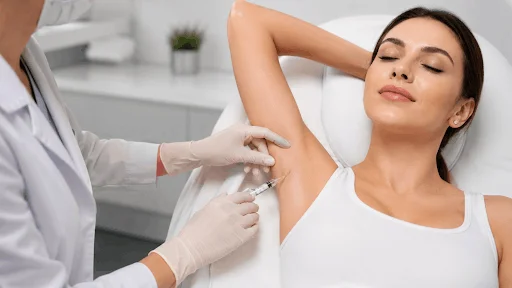
Sweating is normal, but hyperhidrosis can cause perspiration even when the body does not need to cool down. Botox for excessive sweating targets the nerve signals responsible for activating sweat glands in specific areas. As a hyperhidrosis treatment, it can temporarily reduce unwanted sweating in areas such as the underarms and palms.
Does Botox stop the body from sweating completely?
No, treatment affects sweat production primarily in the injected area while untreated sweat glands continue to function.
How Hyperhidrosis Changes the Way Sweat Glands Behave
Botox is a neuromodulator. Once injected into carefully selected points, it temporarily limits the release of a chemical messenger involved in nerve signaling. When the targeted nerves can no longer send the same signal to nearby sweat glands, those glands become less active.
This makes hyperhidrosis injections different from topical antiperspirants, which work at the surface of the skin. The effects are also localized. Sweat glands outside the treatment area continue functioning normally.
Botox is FDA-approved to treat severe primary axillary, or underarm, hyperhidrosis when topical medications do not provide adequate control. Treatment of other areas may be performed off-label following an appropriate medical assessment.
4 Areas Where Botox May Help Manage Excessive Sweating
1. Underarms
Underarm Botox involves a series of small injections spread across the affected skin. It can be considered for severe primary axillary hyperhidrosis that has not responded adequately to topical products.
2. Palms
Persistently damp hands can make gripping objects, using electronics, or handling paperwork uncomfortable. Botox for sweaty palms may be considered in some cases, although palm treatment is an off-label use and requires careful evaluation.
3. Feet
Excessive sweating of the feet can leave socks and footwear persistently damp. Botox may sometimes be used off-label in this area based on the patient’s symptoms and treatment goals.
4. Face or scalp
Some patients experience pronounced sweating around the face or scalp. These areas require particular care because treatment must account for the nearby muscles and nerves.
What to Expect From a Non-Surgical Treatment
As a non-surgical excessive sweating treatment, Botox does not require incisions. A provider administers multiple small injections across the area where sweating is most active.
Results are not immediate. Sweat reduction generally develops after treatment as Botox begins affecting nerve signaling, and the improvement is temporary. The duration varies among patients, so repeat treatment may be considered once sweating gradually returns.
Possible effects around injection sites can include temporary discomfort, swelling, tenderness, or bruising. Risks can also differ according to the area treated, making consultation important before choosing this excessive sweating treatment.
PBK Med Spa Hyperhidrosis Treatment in Brooklyn, NY
Patients researching excessive sweating treatment Brooklyn options can speak with PBK Med Spa about their concerns and determine if a neuromodulator is appropriate for them.
Our team administers neuromodulators including Botox, Dysport, and Xeomin. Plus, we prioritize patient safety and individual treatment goals. Our products temporarily interfere with neurotransmitter release at targeted nerve endings.
While we also use neuromodulators for cosmetic concerns such as forehead lines, frown lines, and crow’s feet, Botox’s ability to influence nerve signaling also explains its medical use for underarm hyperhidrosis.
A consultation for hyperhidrosis treatment in Brooklyn, NY gives the provider an opportunity to review the location and severity of sweating, medical history, previous treatments, and other factors before recommending care.
Frequently Asked Questions
How quickly can Botox reduce underarm sweating?
Patients may begin noticing reduced sweating within several days, although individual response times vary.
Is Botox for hyperhidrosis permanent?
No, Botox temporarily reduces sweat gland activity, and treatment may need to be repeated as its effects wear off.
Does Botox stop the body from sweating completely?
No, treatment affects sweat production primarily in the injected area while untreated sweat glands continue to function.